How solar energy works,
from start to finish
This hub covers how technology works, equipment considerations, and
key terms every solar owner should know.
Sunlight in, electricity out
How Solar Works
Before the guides and resources go deep, here is a quick version of how solar works.

Panels capture sunlight
Photovoltaic (PV) cells in each panel convert daylight into direct current (DC) electricity. No moving parts, no fuel, no sound.

An inverter converts it
Your home or business runs on alternating current (AC). The inverter makes DC power usable.

Your property uses it
Power flows to support your electrical needs. Anything beyond what's needed flows back to the grid.
Start Here
The decision that shapes everything else
Panels get the attention, but the inverter is the brain of the system. Most buyers don't realize they can influence this choice.
Top Visited Guide
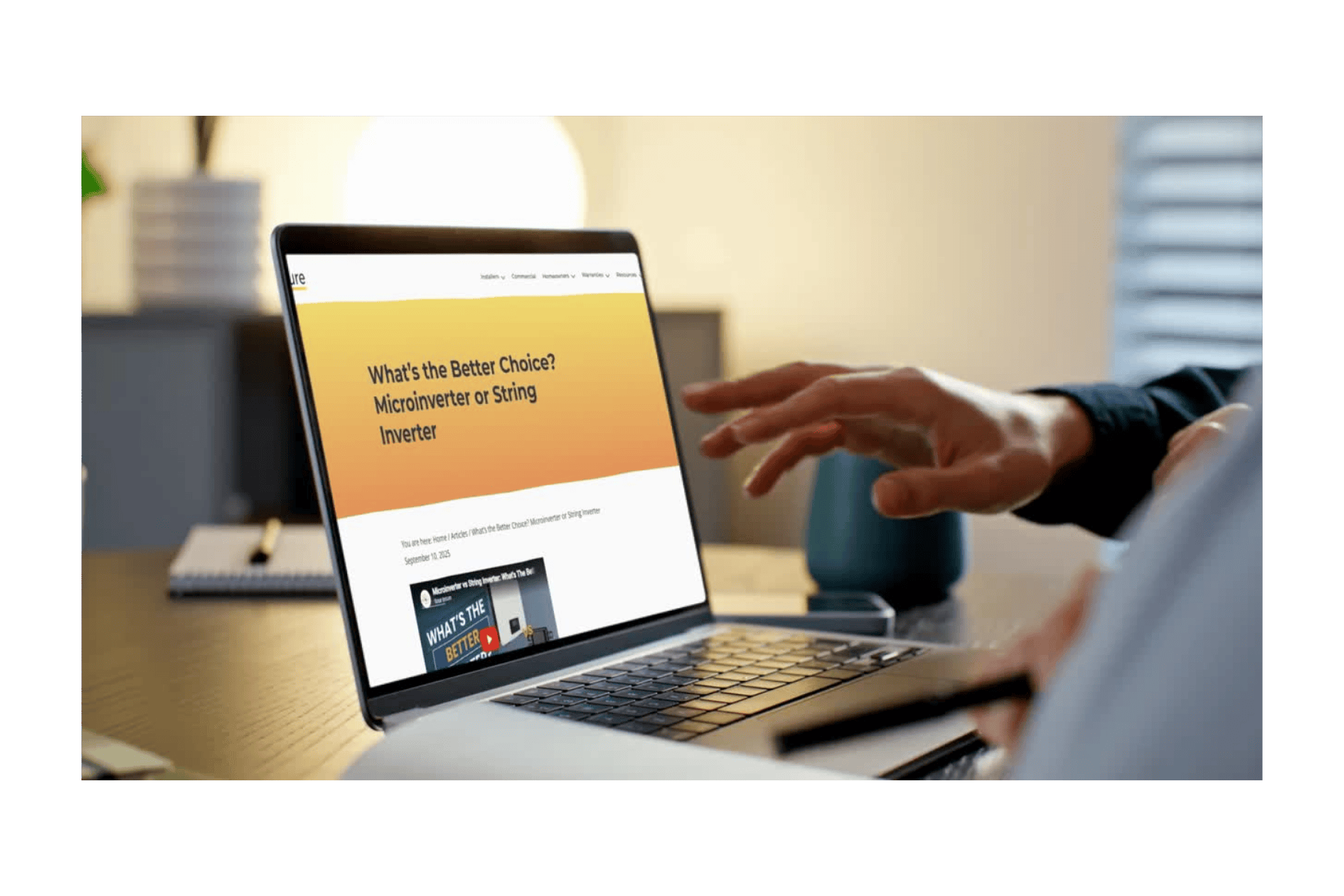
Microinverters vs. String Inverters: Which is the better choice?
Both convert DC to AC, but at different points in the system, with real consequences for performance, monitoring, expandability, and cost. This guide walks through the trade-offs so you can read a proposal with a clear eye before you sign.
Browse All Topics
Explore Resources & Guides
Explore the overviews below with links to our in-depth articles and guides.
System Components
The Equipment in Your Solar System
Systems have 4 major components: panels, inverters, racking, and optional battery storage. Each part has its own quality range and warranty terms, and it's worth researching before you sign a contract.
➜ Reading Solar Data Sheets ➜ Best Solar Panels for 2026
➜ Microinverters vs. Optimizers ➜ The Best Inverters for 2026
System Design
System Design & Performance Considerations
Many factors can affect your system's performance and production. Equipment configuration, roof layout, and weather all affect how much energy your system can produce.
➜ Solar Panel Direction ➜ Roof Angle & Panel Tilt
Battery Storage
Battery Storage & Backup Power
The purpose of battery storage is to store excess solar energy, to help with power during outages, at night, or during periods of high utility rates. Batteries add complexity, cost, and additional considerations.
➜ Solar Battery Reliability ➜ Integrating Solar Storage
Utility
The Grid, Utilities, and Net Metering
Most solar energy systems are grid-tied, meaning they work alongside your utility provider to create usable power, export excess energy, and pull electricity when needed.
➜ Reading Your Electricity Bill ➜ Net Metering Rules (NEM 3.0)
Advanced Concepts
Key Phrases and Concepts
Terms like clipping, TOU rates, NEM policies, and DC-to-AC ratio can affect performance. Solar comes with many acronyms or technical terms, and understanding them can help make discussions easier to follow.
➜ The Solar Rebound Effect ➜ Inverter Clipping
25-30
Years a residential solar system is expected to last.
Source: National Renewable Energy Laboratory
30-60%
How much solar production can drop in winter vs. summer peak months.
Source: Solar Insure, Solar 101
8-24 hrs
Essential-load runtime from a typical 10 to 13.5 kWh home battery.
Source: Solar Insure, Solar 101
Frequently Asked Questions
Common Questions About How Solar Works
Solar panels convert sunlight into electricity through the photovoltaic effect. Sunlight knocks electrons loose in the panel's silicon cells, creating direct current (DC). An inverter then converts that DC into the alternating current (AC) your home uses. Surplus power flows to a battery or back to the grid.
A string inverter converts the combined DC output of many panels at one central point, so shade on one panel reduces the whole string. A microinverter sits on each panel and converts DC to AC individually, so each panel works independently. String inverters cost less; microinverters offer panel-level monitoring and longer warranties.
A grid-tied solar system without a battery shuts down automatically when the grid loses power. This is a code-required safety feature called anti-islanding protection, which prevents the system from feeding electricity into lines that utility workers may be repairing. Battery storage with an automatic transfer switch keeps power on during an outage.
Four factors drive real-world solar production: panel direction, roof angle and tilt, season and climate, and shading. South-facing panels produce the most in the northern hemisphere. Winter output can fall 30 to 60 percent below summer, and very hot days also reduce output because panels are tested at 25 degrees Celsius.
For most homes, whole-home backup is not realistic from a single battery. A typical 10 to 13.5 kWh residential battery powers essential loads, such as a refrigerator, lights, and medical devices, for 8 to 24 hours. Critical-load backup, which prioritizes the most important circuits, is the practical approach for most homeowners.
Net metering is a utility billing arrangement where excess solar electricity exported to the grid earns credits that offset future consumption charges. Programs vary by state and utility, and the credit structure directly affects a solar system's return on investment.
Key Terms
Common solar acronyms and terms
DC/AC
Direct current is what panels produce. Alternating current is what your home uses. The inverter converts one to the other.
kW (kilowatt)
A measure of power, how much electricity is produced or used at a given moment.
Grid-Tied System
A system that is connected to the utility grid. The majority of residential systems are on-grid, interfacing with a home and the existing electric grid.
Roof Orientation
This refers to the direction that the roof faces, which affects the amount of sunlight received by the solar panels.
Degradation rate
The yearly decline in panel output, typically 0.5 to 0.7 percent. A 400W panel makes roughly 88 to 93 percent of that in year 25.
kWh (kilowatt-hour)
A measure of energy, power over time. Bills and production estimates are in kWh.
Net metering (NEM)
A billing arrangement where exported solar earns credits that offset future consumption charges.
Azimuth
The compass angle your solar panels face. 0° is north, 90° is east, 180° is south, and 270° is west.
Peace of mind starts with Solar Insure
A strong installer sets the foundation, and long-term protection keeps it performing. Solar Insure supports homeowners going solar and the solar companies that serve them.
Homeowners
Find a Certified Provider
Solar Companies
Certified Provider Program