
Key Takeaways
AC-coupled and DC-coupled batteries differ primarily in how they connect to a solar system, which affects efficiency and installation flexibility. DC-coupled batteries typically deliver higher efficiency and are best suited for new solar installations, while AC-coupled batteries are easier to add to existing systems and offer greater compatibility. As battery adoption rises due to higher utility rates and reduced net metering, choosing the right coupling type depends on whether a homeowner is installing solar for the first time or retrofitting storage later.
Installers or manufacturers will often describe their batteries as AC-coupled or DC-coupled, but what does that mean? Does this have a major effect on the battery’s operation? Is there a difference in installing one type over another?
Table of Contents
The Need for Batteries
Battery demand and the rate at which it is paired with solar have spiked in recent years, with storage volumes increasing for six consecutive quarters and attachment rates over 40% nationally.
The demand for energy storage comes because of three key reasons: increasing energy rates, the reduction of net metering programs in many states, and grid resiliency concerns.
From 2014-2024, the national average utility rate rose by over 30%. Spikes in inflation in recent years have exacerbated this issue, and the US Energy Information Administation forecasting an additional 4% in 2026. As more states move away from full-rate net metering policies, it becomes increasingly necessary for homes to install batteries to make full use of the energy their solar panels produce.
How Batteries Work
Home batteries are not quite as simple as the AA batteries you may put into a TV remote. High-voltage batteries must interact with an inverter, a device that can control their charge and discharge and ensure that the energy from the battery matches the energy needed in the home.
All batteries are tied to inverters or have an inverter built in, regardless of whether they are paired with solar. The reason is that all batteries must store energy in DC so electrons can flow in one direction. But where in the solar process the battery is connected raises the question of AC-coupled vs. DC-coupled.
What’s The Difference?
AC-coupled or DC-coupled refers to how the battery is connected to the inverter. The key differences between AC and DC coupled batteries lie in efficiency and flexibility. When power is converted from DC to AC, some of it is lost due to heat generated by resistance in the inverter components.
DC-coupled batteries are connected to inverters and can allow power to bypass the inverter’s DC-to-AC conversion and go directly from the panel to the battery.
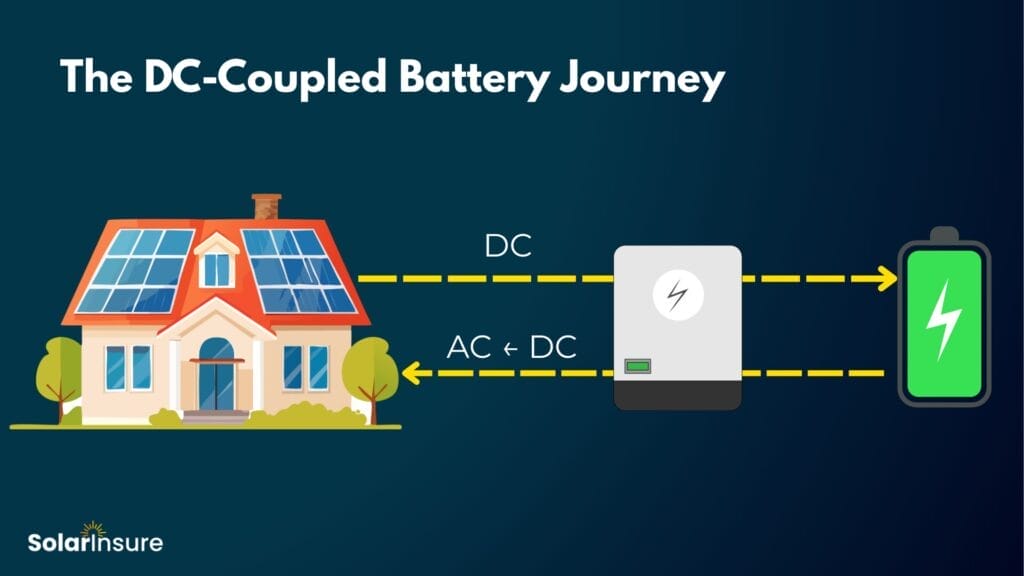
With these setups, energy is converted only once – when the battery discharges. Because there’s only one DC-to-AC conversion, DC-coupled batteries tend to have a higher round-trip efficiency of 95-98%. DC-coupled batteries also allow for oversizing the solar array, because energy that would otherwise be “clipped” can be fed directly to the battery.
AC-coupled batteries, on the other hand, are tied to the inverter after they convert to AC. In these systems, the power must be converted:
- From DC to AC at the inverter
- Back to DC to charge the battery
- Back to the AC to be discharged into the home
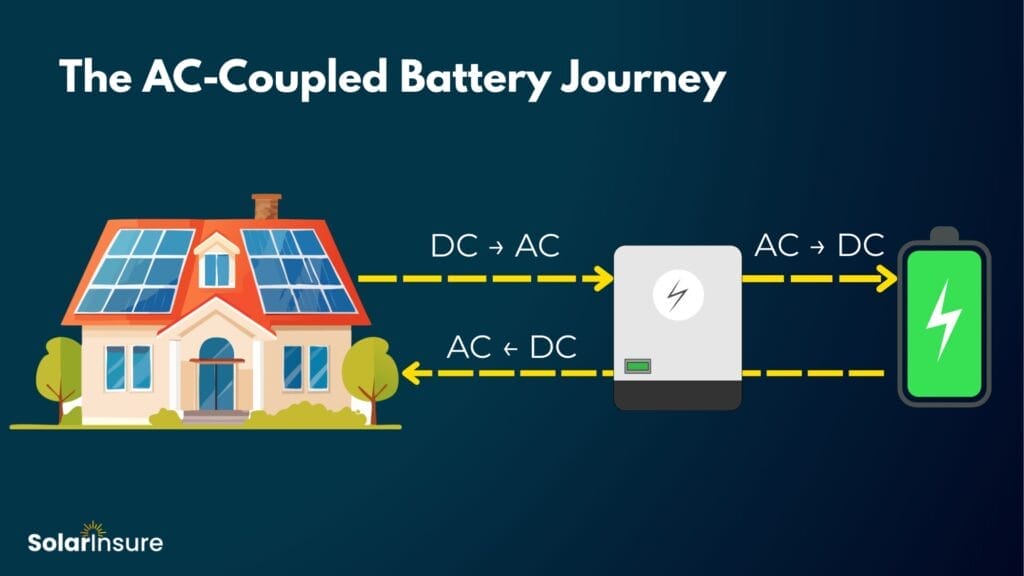
With multiple conversions, AC-coupled batteries are often less efficient, 90-95%. The difference isn’t massive, but losing more power means less power available to run a home.
Flexibility of Installation
The other key difference between the coupling types is the kinds of installations they are best suited for. Because of the interface with an inverter, DC-coupled batteries are often very specific about the type of inverter they can be paired with. For example, SolarEdge’s DC-coupled battery can only be used with SolarEdge’s inverter.
Because of this, DC-coupled batteries are most often seen in new installations or homes built with battery storage later in mind.
AC-coupled batteries, because they are more inverter-agnostic, can be added to almost any existing solar system or charged from an AC source. If a home is retrofitting a battery onto an existing system or adding a battery without solar, AC-coupled is the most logical choice.
What’s the Right Choice?
When it comes to batteries, there’s no one-size-fits-all solution.
Homeowners who are installing solar for the first time and want to maximize efficiency may benefit more from installing a DC-coupled battery. Homeowners adding battery storage to an existing system or wanting more flexibility in the brands of units they can install may benefit more from AC-coupled batteries.
At the end of the day, talk to your installer about the options available and what works best for your unique situation.
Follow Solar Insure on our social media channels to stay connected with the latest industry insights, trends, and expert perspectives. Discover valuable updates, helpful tips, and keep yourself informed and empowered in the evolving solar landscape.
Has your solar installer gone out of business? You don’t have to navigate the uncertainty alone. Discover how SolarDetect can help you with expert remote system checks, repair coordination, and monthly performance updates — backed by Solar Insure and the financial strength of Zurich North America. Take the next step toward peace of mind by exploring SolarDetect today.
