If your solar installer goes out of business, the warranties on your equipment (solar panels, inverter, and battery) remain covered by the manufacturers. What you lose is the installer’s own workmanship warranty and the company that was meant to service, monitor, and repair your system. That service gap is the real risk, and this page explains what it means and how to protect yourself.

With the recent closures of solar industry giants like Titan Solar Power, SunPower, and Freedom Forever many homeowners have been left with systems that may not be working and no one to service them. When a solar company goes out of business, it negatively impacts not just the homeowners but the reputation of the solar industry overall.
It’s frustrating for homeowners to call their original installer only to find out they’re no longer in business and can’t service the system they sold and warranted. While some out-of-business installers are honoring their warranties, many more leave homeowners hanging.

Expert solar support for homeowners who have been abandoned by an installer and need service and long-term support.
If your solar company goes out of business, your next steps depend on where you are in the installation process. In this guide, we will help you navigate the waters and provide some valuable solutions.
Table of Contents
What actually happens to my solar warranty when my installer closes?
A solar system is not covered by a single warranty. It is covered by several layers, and they do not all respond the same way when the installer who sold you the system shuts down. Understanding the three layers is the key to knowing where you stand.
| Warranty layer | Who provides it? | Does it survive the installer closing? |
| Manufacturer equipment warranty | The panel, inverter, or battery manufacturer | Usually yes. It is tied to the product, not the installer. |
| Workmanship/installation warranty | The installer who put the system on your roof | Often no. If the company is gone, there is no one to honor it. |
| Ongoing service | The installer or a separate service provider | Usually no. Service stops when the company stops operating. |
In short, the hardware on your roof is generally still under its manufacturer’s protection. The promises made by the installer — to fix their own installation work and to monitor and service the system over time — are the ones that disappear when the company does. The next sections explain how to confirm your installer’s status and what to do about that gap.
How do I know if my installer is out of business?
Solar companies do not always announce that they are closing. Often the signs appear gradually. You may have an installer problem if you notice any of the following:
- Phone calls and emails go unanswered, or the phone number is disconnected.
- The company website is down, or has not been updated in a long time.
- Scheduled service or repair visits are canceled or never happen.
- Your monitoring app or service portal stops working or goes dark.
- You see news reports or local coverage of the company closing or filing for bankruptcy.
If you want to check whether a specific company has already closed, Solar Insure maintains an updated record of solar company closures. See our complete list of solar bankruptcies and business closures to look up your installer.
What should I do right now if my installer has closed?
If you have confirmed that your installer is no longer operating, take these steps in order. Acting calmly and keeping good records protects you.
- Gather your paperwork. Find your original contract, warranty documents, and any record of the equipment installed — the panel, inverter, and battery brands and model numbers.
- Identify your equipment manufacturers. Your manufacturer warranties are likely still valid. Note who made each major component so you can contact them directly if a part fails.
- Check whether your system is still being monitored. If monitoring has stopped, you may not be alerted when something goes wrong. This is a priority to resolve.
- Find a replacement service provider. Look for a certified solar service company in your area that can take over maintenance, repairs, and monitoring.
- Consider dedicated warranty protection. A third-party solar warranty can replace the workmanship and service coverage you lost when your installer closed. The next section explains how this works.
What if my solar energy system has not yet been installed?
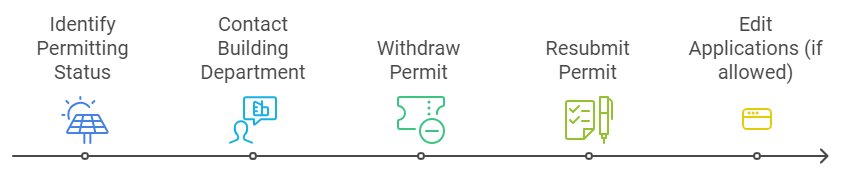
If your system is in the process of being installed or hasn’t yet been installed, there will be more of a lift on you to have the work completed. First things first, make sure you have all the documents listed above, and, if you can, inquire about the current status of your project. Depending on where in the project lifecycle you are, it points you in the next direction. No matter where you are, you’ll need to begin looking for a new installer to complete your job.
If your solar project is in permitting, you’ll need to contact your city’s building department. Building permits typically have to have a contractor specified on them, and as yours is out of business, the permit may need to be withdrawn and resubmitted with the new contractor’s information. In rare cases, cities will allow you to edit the applications.
You will also need to contact your electric utility for the same reason as above.
If your project has an approved permit and is awaiting installation, call the city building department for guidance. They may be able to change the application to the new installer with some additional information about the company.
If you signed your contract shortly before the company announced it was going out of business and no work has been done on your system, you can likely cancel the entire agreement and begin again with a new installer. If you took out a loan for the system, contact the lender and explain the situation so they can help you cancel the financing.
How do I protect my solar panels before something goes wrong?
The most reliable way to close the service gap left by a failed installer is a dedicated third-party solar warranty — coverage that does not depend on the original installer staying in business.
This is what the SI-30 Warranty from Solar Insure is built to do. It provides 30 years of coverage for your solar system, including the workmanship and service protection that disappears when an installer closes. Because the coverage is held independently, it stays in place regardless of what happens to the company that installed your system. If a covered issue arises, there is a defined process and a responsible party to turn to — which is exactly what is missing after an installer failure.
For homeowners, this means continued protection for the panels, inverter, and battery, plus the monitoring and service support that keep a system performing over its full life. It turns an uncertain situation into a clear one. Learn more about the SI-30 Warranty and how it protects your system for the long term.
What if my solar energy system has been installed but does not have PTO (permission to operate)?
If your project install was complete but now the company is out of business, you’re almost all the way through but just have to get over one last hump – inspection.
Depending on the quality of the work your solar installer did, you might be able to pass the inspection without needing a new installer’s intervention. However, it’s recommended that you contact a new solar install company and explain that you just need to pass inspection.
The new company may be able to assist you in the final steps or even come out to do an inspection of your system and ensure you’ll pass no problem. You (or the new company) will need to submit the previous report to the utility to obtain PTO. Inspections do expire, so if yours has already been done, don’t delay in submitting the report.
Read more about steps to take if you do not yet have PTO here.
What if my solar energy system is fully installed and has PTO (permission to operate)?

If you fall into this category of homeowner the actions required of you are minimal. Make sure you have the documents listed above, especially the interconnection agreement, inspection report, and any incentive paperwork.
If your system received permission to operate (PTO) shortly before the company announced its closure, you’ll want to be sure they filed everything with the utility and that your system is set to operate properly.
For active maintenance of future problems, you’ll likely have to hire a new solar company to perform maintenance. Some companies “honor” their workmanship warranties even after they go out of business by hiring a company to handle their maintenance, but that doesn’t mean it will be cost-free. Expect to pay for future labor costs.
If your system was leased, be sure to inquire about how the lease will function. Many leases or power purchase agreements go through a third-party company and would continue uninterrupted much like if you took out a loan. Your previous installer may have a third party they hire out to perform maintenance, or you may need to hire your own company to perform maintenance.
Monitoring
Additionally, make sure you have monitoring access from the manufacturer. Monitoring your system can sometimes happen through your installer’s portal, but is most often done directly from the manufacturer’s monitoring portal.
Without monitoring access, it will be much harder to know if your system is performing properly or if it needs maintenance. It’s also important to note not having monitoring can void your inverter warranty and have effects on production-based incentives.
Incentives
If your state or local community has incentives outside of the federal tax credit, make sure to contact the state agency in charge of the program and speak with them. They can guide you to a new solar company or another agency they work with to ensure your incentive obligations are fulfilled.
Many states have advocacy organizations you can contact for help if your solar installer goes out of business. Organizations like the Solar Energy Industries Association and state variants of that ground help homeowners and the industry alike.
What happens to my warranties?
Solar energy systems come with warranties from the equipment manufacturers and from the company that installed the system.
Typically, the only warranty provided by the company is the workmanship warranty. Workmanship warranties are warranties given to guarantee the work done by the installers during the installation. These typically protect against improper installation, any damage done to the home during installation, and sometimes roof penetrations. When a solar company goes out of business, the workmanship warranty is typically voided. Important to note that workmanship warranties do not normally cover labor costs.
If the company you worked with provided an independent warranty like Solar Insure’s SI-30 Solar or SI-30 Total, you can contact Solar Insure and our expert team will connect you with another certified solar provider in your area to complete any maintenance at no cost to you.
Equipment warranties will not be affected by a solar installer’s insolvency, since those warranties come directly from the manufacturer. Homeowners may need to work through an installer to claim those warranties, though, as they often require testing and evidence of faults.
Ongoing Maintenance
As was mentioned above, once you’ve figured out how to get the system installed and collected all your paperwork, there is still the need for ongoing maintenance. Solar energy systems are full of complex electrical components that will likely require maintenance at some point during their 25-year lifetime.
Our extensive data repository gives us insight into equipment and its failure rates. Our data indicates that in the first two years, less than 1 in 800 microinverters experience failures, while approximately 1 in 350 string inverters experience failures in the same timeframe.
Click here to read our full report on inverter reliability.
While you can hire a new company to take over your system, there is an easier solution that offers far more.
How can I protect my solar system after my installer has gone out of business?
SolarDetect by Solar Insure brings back the support residential solar owners have been lacking. Backed by long-term protection, the new warranty helps reestablish confidence for those abandoned in the solar ownership process.
SolarDetect is a one-of-a-kind program that keeps homeowners’ systems running smoothly and protects their investment for the long term. SolarDetect helps protect homeowners with:
- Proactive Monitoring: advanced software continuously monitors your solar energy system’s performance, detecting any anomalies or potential issues, and allows us to take immediate action and provide timely service to ensure your system operates at its best.
- Complete Coverage: comprehensive coverage for your solar panels and inverters. Whether it’s a malfunction or a performance issue, our service guarantees that you’ll receive the support you need to keep your system up and running.
- Low Deductible: If a claim is filed, our deductible is only $100. This means you won’t be burdened with high out-of-pocket expenses when you require assistance.
- Affordable Pricing: Gain access to top-tier monitoring and warranty services. Compared to the potential costs of repairs or replacements, our service offers exceptional value and ensures your solar energy system’s longevity.
- Reliable Insurance Partner: We’ve partnered with Zurich Insurance, a trusted industry leader, to provide you with the backing of a renowned insurance company. This means you can have confidence in the reliability and financial stability of our warranty coverage.
Visit the SolarDetect webpage and submit your application to restore your peace of mind.
Don’t leave your solar investment unprotected. Learn more about Solar Insure’s offerings and how SolarDetect can safeguard your future at solarinsure.com.
Discover more from Solar Insure
- Ohio Solar Incentive Programs
- Connecticut Solar Incentive Programs
- Solar Insure Elite Provider Spotlight: Independent Energy Hawaii
- Solar Panels Are Getting Bigger and More Powerful. Your Warranty Needs to Keep Up.
- Sodium-Ion Batteries: Is a Lithium Alternative Finally Here?
Are solar panel warranties transferable?
Manufacturer equipment warranties are usually transferable to a new homeowner if you sell your property, though the exact terms vary by manufacturer. Installer workmanship warranties may or may not transfer, and they only have value while the installer is still in business. An independently held third-party warranty can offer more predictable continuity.
What is a workmanship warranty?
A workmanship warranty covers the quality of the installation itself — the labor, wiring, mounting, and roof penetrations — rather than the equipment. It is provided by the installer, not the manufacturer, which is why it is at risk if the installer goes out of business.
Who honors my warranty if the company that installed my system is gone?
For equipment problems, the manufacturer of the panel, inverter, or battery generally still honors its warranty. For installation and service problems, there may be no one to turn to unless you have separate coverage. A dedicated third-party warranty exists specifically to fill that gap.
Will my solar panels still work if my installer closes?
Yes. An installer closing does not switch off your system — your panels keep producing power. The risk is not immediate failure; it is that if something does go wrong later, you may have no one to diagnose or repair it.
Is a third-party solar warranty worth it?
For many solar owners, the value is in certainty. A solar system is a long-term asset, and installer closures have become common across the industry. Independent coverage means the protection for your system does not depend on any single company remaining in business over the next several decades.
How do I check if my solar installer is still in business?
Start by contacting the company directly and checking whether its website and monitoring services are still active. You can also look up the company in Solar Insure’s regularly updated list of solar bankruptcies and business closures, and check news coverage for your region.
An installer closing does not have to mean losing protection for your solar investment. Knowing how your warranty layers work — and putting independent coverage in place — keeps your system protected for its full life, regardless of who installed it.

Ohio Solar Incentive Programs
With an average residential electricity rate roughly between 16 and 18 cents per kilowatt-hour, Ohio homeowners have a real incentive to look at solar.Continue reading→

Connecticut Solar Incentive Programs
With an average residential electricity rate of roughly 20 cents per kWh, well above the national average, Connecticut homeowners have plenty of financial reason to look at solarContinue reading→

New York Solar Incentive Programs
New York State is making solar energy more accessible to homes, businesses, and communities through NY-Sun. Our goal is to help make it possible for New Yorkers to choose clean energy while lowering their energy costs. NY-Sun has multiple resources to help New Yorkers harness the power of the sun, including:Continue reading→
