
Key Takeaways
Perovskite solar panels are emerging as a promising next-generation technology that could significantly improve solar efficiency while reducing production costs. With lab efficiencies reaching up to 30% and tandem designs nearing 34%, perovskites have the potential to outperform traditional silicon panels by capturing a broader spectrum of light. However, challenges around durability, lifespan (currently ~2.5 years), and material stability must be solved before widespread commercial adoption becomes viable.
Solar Providers – ready to offer unmatched value for your clients? Click here to apply to become a Solar Insure Certified Provider.
Homeowners/Business Owners – Learn more about our warranty offerings here.
Recently, we discussed new innovations from Tesla and Jinko that are aimed at installation speed and module efficiency, respectively.
Companies across the solar market are trying to become more efficient, lower costs, and gain a competitive edge. Spend some time in solar circles or researching on the internet, and you’ll find one idea that has been captivating minds and research: perovskite
This form of thin-film solar technology is being hailed as a new evolution for solar panels that could increase panel efficiency by 10% or more. But what are perovskite solar panels, and will they truly change the solar industry? Let’s explore.
Table of Contents
What Are Perovskites?
The term perovskites (peh·ruhv·skite) is not exclusive to solar. Perovskite is actually a specific mineral, calcium titanium oxide or CaTiO3. However, some other minerals fall into the Perovskite family because they share a unique crystalline structure.
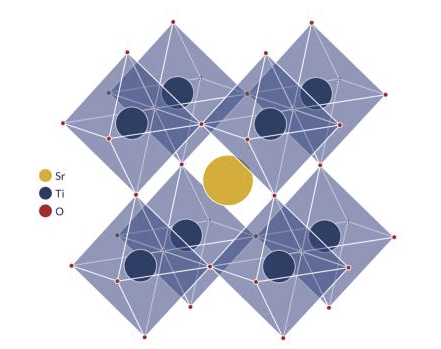
Generally, perovskite minerals follow an ABX3 molecular structure. Since the structure is common, other elements can be substituted, allowing the minerals to exhibit differing properties, including magnetoresistance, superconductivity, ferroelectricity, and more.
Perovskites’ adaptability has made them a popular material for a wide range of applications, such as solar panels, fuel cells, lasers, microelectronics, batteries, and more.
Perovskite Solar Panels
One of the most promising and researched applications for perovskites has been as solar cells due to the material’s low production cost, wide bandgap for light absorption, and high efficiency.
In general, solar photovoltaic (PV) technology falls into one of two categories: wafer-based PV and thin-film PV. Wafter-based PV is the traditional solar panels we’ve come to know and love as the cornerstone of the solar industry. Thin-film technologies are sometimes used in commercial or utility-scale applications, but their inefficiency is a big downside. Thin-film panels are often used in off-grid solar applications, such as RV solar, folding kits, or solar lights.
Perovskite solar cells, however, pose an interesting twist because they have been shown to achieve efficiencies equal to or exceeding those of traditional silicon PV cells. There have been incredible advances in perovskite efficiency, with studies showing efficiency rising from around 3% in 2009 to 30% today. For reference, the highest reported traditional silicon cell efficiency today is 25%, from Aiko Solar.
While many different types of perovskites are out there, the most common today are metal-halide perovskites, which combine organic ions, metals, and halogens
How Perovskite Panels Work
Perovskite panels work in the same way as traditional solar panels, through the photovoltaic effect. In simple terms, the photovoltaic effect works by stacking layers of semiconductors.
As sunlight strikes the cell, electrons in one semiconductor are excited, gain energy, and break free of their bonds, leaving behind an electron hole in the other semiconductor. This separation of positive and negative charges creates an electric potential difference, or voltage.
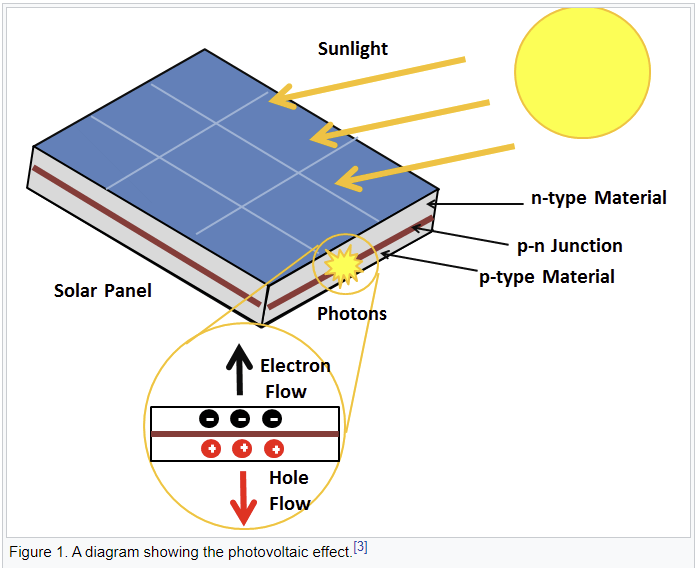
Perovskite cells replace the typical silicon cell with a perovskite compound, typically a hybrid organic-inorganic lead or tin halide material.
Why Are They So Promising?
Perovskite panels are highly researched and promising due to two key factors: cost and efficiency.
From a production standpoint, perovskite structures aren’t utilizing rare-earth metals like some traditional solar panels. The materials are readily available and can be easily synthesized in laboratory settings. With their high light absorption, perovskites can be produced as thin-film panels, meaning far less material is required.
Thin layers of perovskite are used in cell production, and the material doesn’t need to be heated to the same temperature as traditional cells, reducing the energy required to make them.
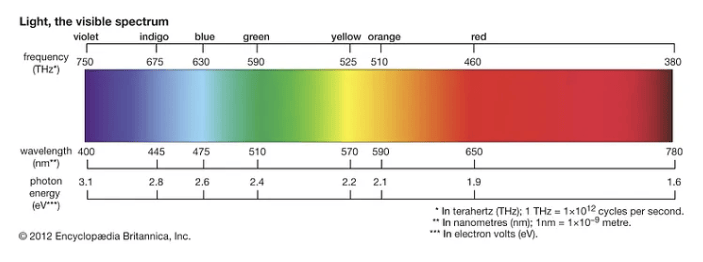
But by far the most promising feature is efficiency. Perovskites have already been shown to outperform traditional solar cells in lab settings. This has to do with their band gap, which is the minimum energy required for electrons to break free from the parent atoms.
Essentially, the band gap of a solar cell determines which wavelengths of light (colors) it can use to generate electricity. Perovskites can be tuned to span a wider band gap, meaning more of the light spectrum can excite electrons and generate electricity.
What’s Holding Perovskites Back?
While perovskites have a lot of potential to change solar forever, they’re still a ways away from commercial availability. The core reason for this is the product’s lifespan and durability. Perovskite materials deteriorate quickly in high-temperature and moisture environments, which are common in solar installations.
Silicon cells are a mature technology with lifespans of upwards of 30 years. Perovskites, however, have only lasted for around 2.5 years.
Another consideration is potential toxicity. A common element used in perovskite panels today is lead, raising concerns about the environmental safety of the cells.
Real Applications Today
A promising application being explored by some manufacturers and researchers is the tandem cell, which combines silicon and perovskite technologies.
Since perovskite can absorb higher-energy light, the two can be combined into a single panel to produce even more energy. Perovskite tandem cells have reached efficiencies of nearly 34%, nearly 10% higher than the best silicon solar panels available today.
If the stability of perovskites can be improved, tandem cells could present a massive opportunity to produce even more power from panels, using less space overall.
Follow Solar Insure on our social media channels to stay connected with the latest industry insights, trends, and expert perspectives. Discover valuable updates, helpful tips, and keep yourself informed and empowered in the evolving solar landscape.
Has your solar installer gone out of business? You don’t have to navigate the uncertainty alone. Discover how SolarDetect can help you with expert remote system checks, repair coordination, and monthly performance updates — backed by Solar Insure and the financial strength of Zurich North America. Take the next step toward peace of mind by exploring SolarDetect today.
