
Key Takeaways
Tesla has relaunched U.S. solar panel manufacturing with its new TSP-415 and TSP-420 modules. While performance is in line with industry standards, the panels feature 18 power zones for better shade tolerance and a rail-less mounting design that can cut install time by up to 33%. These innovations may reduce soft costs and influence future residential solar installations.
A name among the forefront of clean energy, Tesla is about as recognizable as it comes in the clean energy space. Powerwall 3’s have swept through the energy storage market, and solar roofs have been a dream of many homeowners.
After shifting much of its production away from manufacturing solar between 2021 and 2024, Tesla announced at the end of January that it is reviving its solar panel manufacturing arm out of the Buffalo, NY, Gigafactory to create the first all-Tesla residential product offering.
Let’s explore the specs behind these new TSP-415 and TSP-420 panels and how they compare to other panels on the market.
Table of Contents
Panel Specs
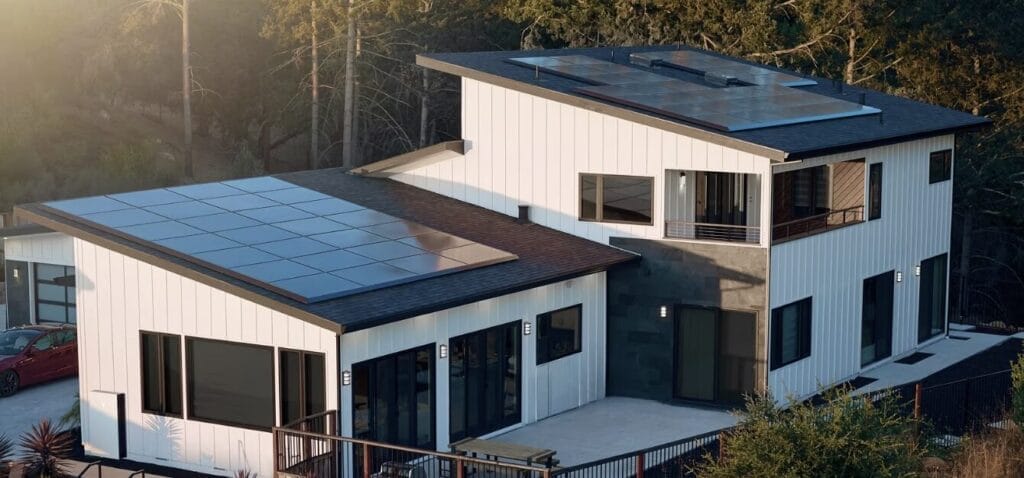
Tesla is producing two panel versions: the TSP-415, a 415W panel, and the TSP-420, a 420W panel. Both feature a sleek all-black design and an efficiency above 20%. From a purely technical perspective, these specs aren’t fundamentally different from those of other panels on the market.
What makes these panels unique and potentially game-changers is the changes to power zones, integrated mounting system, and low-profile look. Here’s a look at some of the key details from the product datasheet:
| Model Number | TSP-415 | TSP-420 |
| Power Class | 415 W | 420 W |
| Test Method | STC | STC |
| Max Power, Pmax (W) | 415 | 420 |
| PTC Rating (W) | 390.6 | 395.4 |
| Open Circuit Voltage, Voc (V) | 40.92 | 40.95 |
| Short Circuit Current, Isc (A) | 12.93 | 13.03 |
| Max Power Voltage, Vmp (V) | 34.24 | 34.29 |
| Max Power Current, Imp (A) | 12.12 | 12.25 |
| Module Efficiency (%) | ≥ 20.3% | ≥ 20.5% |
| Operational Temperature | -40 °C up to +85°C | |
| Weight | 22.3 kg | 49 lb | |
| Dimensions | 71.1 in x 44.7 in x 1.57 in | |
| Certifications | IEC / UL 61730 – 1, IEC / UL 61730 – 2 and IEC 61215 | |
Power Zones
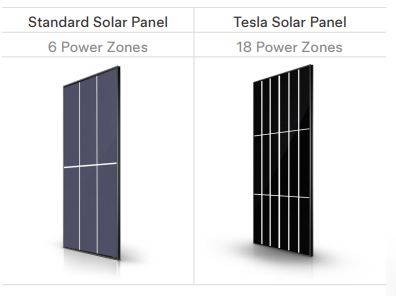
One of the features Tesla has built into these new panels is an increased number of “power zones”. Essentially, the panel wiring is divided into 18 “zones” to reduce the effects of shade on a panel. When shade covers part of a solar panel, it reduces the energy output.
When shade hits a particular zone, all the energy output from that zone is reduced. By dividing the panel into more zones, these panels could produce more power than traditional panels because less of the total panel area is subject to power reduction.
Integrated Mounting
Undoubtedly, the most unique feature of these new panels is the integrated mounting system and groove included on the frame. The industry standard for solar panel frames has been a smooth aluminum frame with in-between or on the underside. Panels then clamp to and sit on top of a rail, a few inches off the roof.
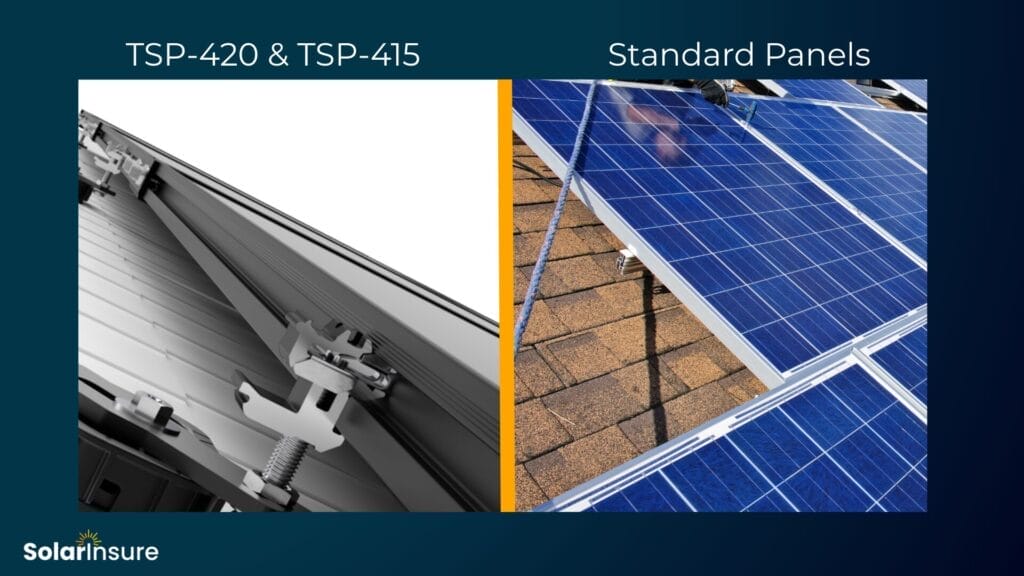
Tesla’s new panels have a grooved frame and their own mounting hardware to allow for a rail-less install where panels sit closer to the roof. Rather than clamps between panels, interlocking pieces fit into the grooves so the panels are closer together. The included skirting gives the system a low-profile aesthetic.
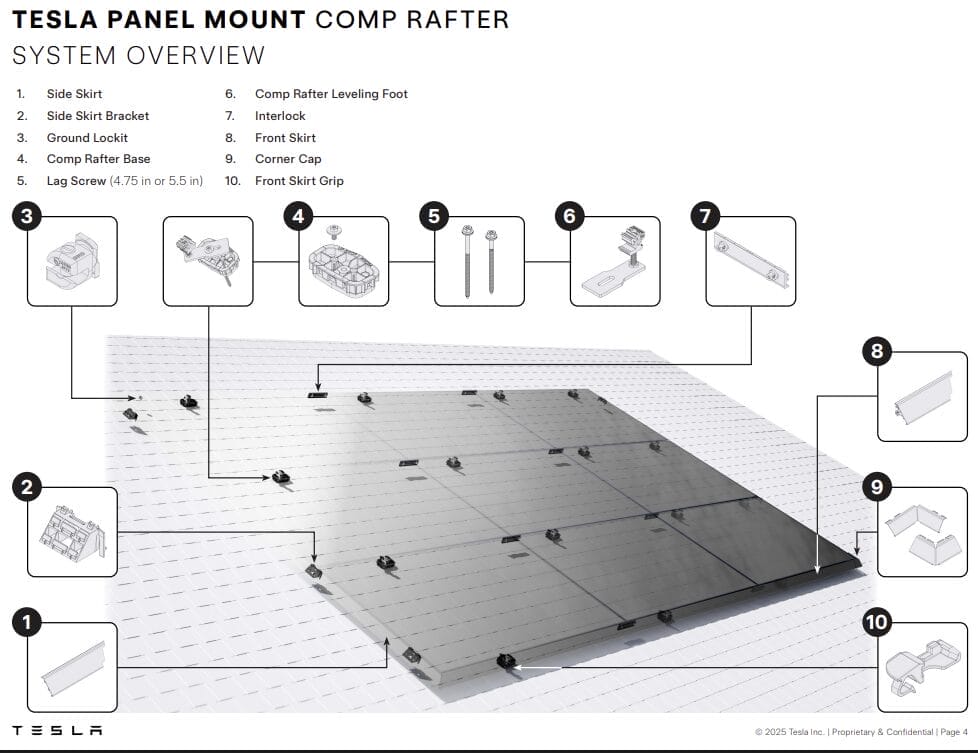
Tesla says their redesigned mounting method can decrease installation times by 33% while using 15% fewer roof penetrations. The reduction in materials and labor hours means solar installers can complete jobs faster and at lower costs.
Warranty
The TSP-415 and TSP-420 come with the industry standard 25-year product warranty. Performance degradation warranties are also an industry standard for panels, and this product comes with a 2% year-one and 0.45% per year thereafter for 25 years.
This means that the panels are warranted to deliver at least 98% of rated peak power in year 1, 93.9% in year 10, and 87.2% in year 25.
This degradation puts it in line with most other panels in the industry. High-end panels like REC have a performance warranty of 0.25% per year, and more standard panels have 0.5% per year.
Link to the full warranty documentation.
Tesla Solar Panels on the Solar Insure AVL
At Solar Insure, we strive to make solar a secure investment for homes and businesses that make the switch to clean energy. Our Approved Vendor List (AVL) manufacturers are rigorously vetted, and only equipment from the AVL can be covered by a Solar Insure warranty.
Tesla’s new solar panels and Powerwall 3, are included on our AVL. Homeowners looking to get their whole Tesla energy ecosystem can also have the 30-year material and labor production provided by our warranties
Impact on the Industry
The launch of these panels comes at a time when modules, especially those produced domestically, are in short supply and sorely needed. For years now, the industry has been looking for creative ways to reduce soft costs of installations, and the reduced equipment needs of these panels, along with faster installs, may start a new trend in panel design.
Follow Solar Insure on our social media channels to stay connected with the latest industry insights, trends, and expert perspectives. Discover valuable updates, helpful tips, and keep yourself informed and empowered in the evolving solar landscape.
Is your solar company out of business? SolarDetect offers expert remote Solar Health Checks and can connect you with a vetted, quality service provider when needed. Visit https://detect.solarinsure.com/
