
I was born and raised the daughter of a construction guy. My dad’s career has always been HVAC, and over the past 50 years, he’s been crawling through attics, handling refrigerants, and mastering a career defined by precision and grit. Naturally, now that I’m in the solar industry, and with diversification top of mind for so many EPCs, I hear HVAC, roofing, and other adjacent opportunities come up constantly as “natural extensions.”
On the surface, it makes sense. But diversification into these fields isn’t a 1:1 perfect extension. Each comes with its own rules, risks, and expertise, and without careful planning, what looks like growth can quickly turn into a liability.
Table of Contents
The Allure of Diversification
Diversification is one of the hottest topics in solar right now. As competition intensifies and margins tighten, many EPCs are looking beyond panels to expand their service lines. On paper, it feels like the natural next step: broaden your offerings, capture more of the customer wallet, and build stickier long-term relationships.
The logic is clear:
- Roofing: You’re already on the roof, so why not own the full scope?
- HVAC: Solar ties directly to energy efficiency, making heating and cooling feel like a seamless add-on.
- Smart Home Automation: Customers are asking, and demand continues to grow.
These opportunities are real, but each comes with its own blind spots. The challenge isn’t in spotting the potential; it’s in navigating the complexity without eroding profitability or damaging reputation.
Why It’s Not a Straight Line
What looks like a natural extension on paper rarely plays out that way in the field. Roofing, HVAC, and home automation may seem connected to solar, but each comes with unique complexities that can trip up even the most experienced EPCs. Here are the realities that make diversification more challenging than it first appears:
Expertise is Specialized
Every trade has its own depth of knowledge. Solar crews don’t become HVAC experts overnight, and roofers can’t just pivot into solar without specialized training. As my dad shared after five decades in HVAC:
“HVAC isn’t something you can fake. If you don’t know how to size it, balance it, and dial it in right, the whole system’s going to fail. That kind of mistake wastes energy, damages equipment, costs the customer, and destroys trust. You only get to make that mistake once.”
The same principle applies to roofing, electrical work, and every adjacent line of work.
Compliance and Codes Multiply
Solar already comes with its own permitting challenges, but roofing and HVAC add additional layers of building codes, safety standards, and environmental regulations. Each missed detail can delay projects, increase costs, or damage your reputation with clients and inspectors. This is where EPCs need to take a hard look at internal capacity. If you don’t already have a dedicated permitting or compliance function with the bandwidth to take on a new style of permitting, diversifying into new areas can hurt the rest of the team.
Margins Can Shrink Fast
Expanding into roofing, HVAC, or home automation without dedicated crews or specialized training usually means pulling solar teams into work they’re not fully equipped to handle. Productivity drops, mistakes increase, and callbacks become more frequent.
At the same time, new trades bring hidden costs, including specialized tools, certifications, safety training, insurance premiums, and permitting requirements that eat into already thin margins. What looks profitable on a spreadsheet can quickly erode once the real costs of execution show up in the field.
Take a simple example: a $200K roofing add-on might be modeled at a 20% margin. But add in $10K for new safety certifications, $8K for equipment, and another $12K for rework or callbacks when crews are stretched thin, and suddenly that margin has collapsed to single digits.
Instead of creating a growth engine, hastily implemented diversification can leave EPCs with overextended staff, higher liability, and projects that barely break even.
Reputation Is on the Line
Customers choose you because you’re a proven solar expert. They’re not just buying panels and labor; they’re buying your credibility, your track record, and your ability to deliver. The moment you branch into new services, that reputation is on the table.
If roofing, HVAC, or home automation work falls short, whether it’s a leaky roof, an HVAC system that underperforms, or a smart device integration that never quite works, the customer doesn’t separate those failures from your solar work. To them, it’s all one company. One weak link can erode confidence across your entire brand.
Diversification is Doable
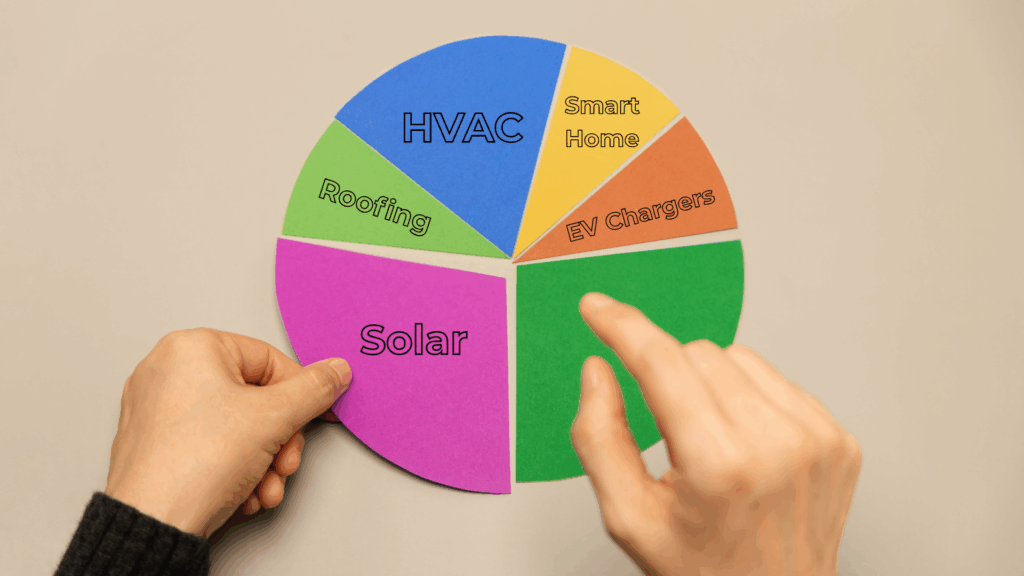
While diversification cannot be a knee-jerk endeavor, it is absolutely doable. If you’re serious about adding roofing, HVAC, home automation, or another service, here are four recommendations that make the difference between growth and liability.
- Deliberate Planning
- Before expanding, model the financial implications, including labor, materials, overhead, training, and insurance. Understand the “hidden costs” of new trades.
- Stress test those models against worst-case scenarios, such as unexpected compliance issues, service calls, and longer permitting times.
- Make sure your core solar business remains stable; you don’t forget about the sector you’ve already mastered.
- Strategic Partnerships
- Instead of trying to do everything in-house, consider partnering with established firms in HVAC or roofing. This allows you to leverage their expertise while you build capacity.
- Use partner relationships as learning labs: observe their operations, understand their code concerns, and learn what clients expect in those fields.
- Training & Certifications
- Certifications matter. Period. For many HVAC technicians, states require licenses and certifications, sometimes even EPA exams, and some states require class and field work.
- For roofing, EPCs can upskill through manufacturer training and national programs like NRCA ProCertification or through supplier-led training.
- While most states do not require credentials for home automation, there are certifications like CEDIA’s networking and systems integration.
- Warranties & Service Agreements
- Use strong warranties and service agreements to shift long-tail risk away from your balance sheet. If a roofing membrane fails or an HVAC system underperforms after hard use, you want contractual protection rather than absorbing costs.
- Implement oversight systems that include QA/QC checkpoints, audits of work, documentation of installations, and, when possible, performance monitoring. The earlier you catch defects or underperformance, the less expensive it becomes.
- Insurance, bonding, and compliance systems must align with the expanded field of work, e.g,. roofing contractors often need additional insurance, safety, and more.
Respect the Craft
Diversification beyond solar is a real opportunity, but it’s not a straight line, and it’s never one-size-fits-all. When approached with planning and expertise, it can unlock new revenue streams and deepen customer loyalty. When rushed, it risks draining resources and weakening your reputation.
The upside is clear, but so is the complexity. And if there’s one takeaway from both my experience in solar and my dad’s 50 years in HVAC, it’s this: each line of work comes with its own depth, and underestimating that reality is the fastest way to turn even the best laid intentions into a liability.
As my dad shared, “There’s no shortcut to doing it right. Every trade’s got its own way, and if you don’t respect that, you’re going to get burned.”
Follow Solar Insure on our social media channels for all the information you could ever need about solar. Stay up to date with the latest in solar tips, trends, SI-30 product notes, and pro tips for success in your solar business.

Prepaid Solar Options Are Popular, But They’re Missing Key Protections
Key Takeaways Solar Providers – ready to offer unmatched value for your clients? Click here to apply to become a Solar Insure Certified Provider. Homeowners/Business Owners – Find a...Continue reading→

Solar Panels Are Getting Bigger and More Powerful. Your Warranty Needs to Keep Up.
Key Takeaways Solar Providers – ready to offer unmatched value for your clients? Click here to apply to become a Solar Insure Certified Provider. Homeowners/Business Owners – Find a...Continue reading→

SI-Battery: The Economics Behind Our Battery Warranty
Battery storage is becoming an important part of the modern energy system, but long-term battery protection presents a different challenge than that of traditional solar...Continue reading→
