
Key Takeaways
Commercial solar helps CFOs convert unpredictable utility costs into stable, forecastable operating expenses while protecting margins from rate volatility. With typical 5–8 year payback and potential 8–12% returns, solar strengthens financial planning, reduces risk, and supports long-term capital strategy.
Utility bills have always been a line item CFOs dread. For large corporations, they’re an operational expense that eats into margins across dozens of facilities. For small and mid-sized businesses, a utility rate hike can significantly impact profits. Regardless of company size, utility energy costs remain an uncontrollable expense that directly impacts profitability, budget predictability, and investment in growth; you have to keep the lights on, but you can’t predict the price of the utility’s energy.
That’s why more CFOs and business leaders are prioritizing commercial solar. Solar flips energy from a volatile, unpredictable cost into a dependable line item. Instead of being at the mercy of the utility, solar creates stability, an investment that pays off over time while insulating the business from future utility rate hikes.
Table of Contents
Commercial Solar’s Value to Businesses
At Solar Insure, this perspective is championed by our CFO, Eric Ryan. With nearly two decades of experience in financial leadership and risk management, Eric has seen firsthand how unpredictable energy costs erode margins and complicate planning. For him, the real value of solar energy is control. As he explains
“Business owners face significant challenges from rising electricity costs, which directly impact profitability, budget predictability, and investment in growth. For energy-intensive businesses like manufacturers and retailers, these higher utility bills can become a major operational risk. By investing in on-site solar panels, businesses can achieve long-term cost stability and reduce or eliminate their dependence on the grid. This allows them to plan with confidence, allocate capital more strategically, and protect profitability against rising utility rates.”
Energy Volatility Eats at Margins
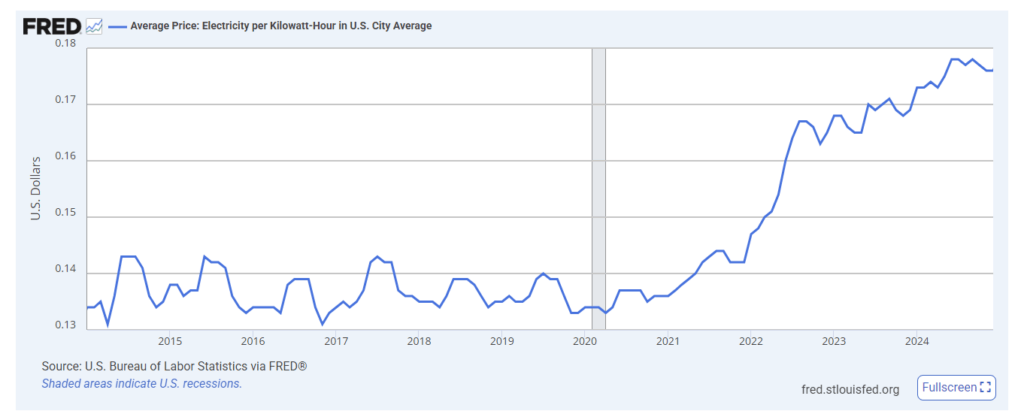
Energy cost volatility is a universal margin threat, whether you’re managing a Fortune 500 footprint or running a 10,000-sq-ft warehouse. Over the past decade, commercial electricity prices have trended upward at ~2.8% annually in markets like California. U.S. retail rates are projected to climb another 13% between 2022 and 2025 and continue outpacing inflation through 2026.
For large companies, this kind of volatility destabilizes operating expenses and undermines profitability, creating unbudgeted costs across distributed facilities. For small to medium-sized businesses (SMBs), even a 10% spike can disrupt capital allocation, potentially leading to delayed hiring, reduced operations, or increased costs passed on to customers.
Solar as a Hedge: Turning Energy Into a Known Cost
What makes solar energy so powerful for businesses isn’t just the clean energy story; it’s the financial predictability.
For CFOs, solar acts as a hedge, converting a variable utility bill into a fixed, long-term cost. Once installed, you know what your system will produce for the next 25-30 years. As our CFO, Eric Ryan of Solar Insure, puts it: “Predictability is everything. With solar, you take one of the most volatile expenses on the income statement and turn it into a stable, forecastable number.”
For enterprises, the same stability applies across multiple sites, transforming millions in unpredictable energy costs into a number that can be accurately forecasted and reported.
For SMBs, it means no more budget surprises—your utility bill shifts from a moving target to a manageable, predictable line item. As Ryan adds, “For smaller operators, solar provides budget certainty. Instead of worrying about the next utility hike, you can focus on reinvesting in growth and employees.”
ROI That Makes Business Sense
An investment in solar for a business of any size is more than just an operational upgrade and PR piece; it’s an investment that stacks up against other financial plays. Most businesses see payback in five to eight years, meaning the system essentially generates free power for another 15 to 20 years after that. Returns are equally strong: depending on incentives, commercial projects often deliver internal rates of return (IRRs) in the 8–12% range.
Even as the ITC phases down in the coming years, solar still makes sense. Equipment costs have dropped more than 70% over the last decade, and demand-side savings from storage, resilience, and lower operational risk continue to strengthen the case. A business focused on long-term sustainability is less concerned with short-term paybacks, instead looking at the lasting impact on its operations and balance sheet.
Risk Mitigation That CFOs Can Rely On
Beyond savings, solar is also a powerful tool for reducing risk, and for finance leaders, that is just as important. Outages, compliance requirements, and unpredictable maintenance costs all create uncertainty in the budget. Solar helps businesses take control of these variables and plan with confidence.
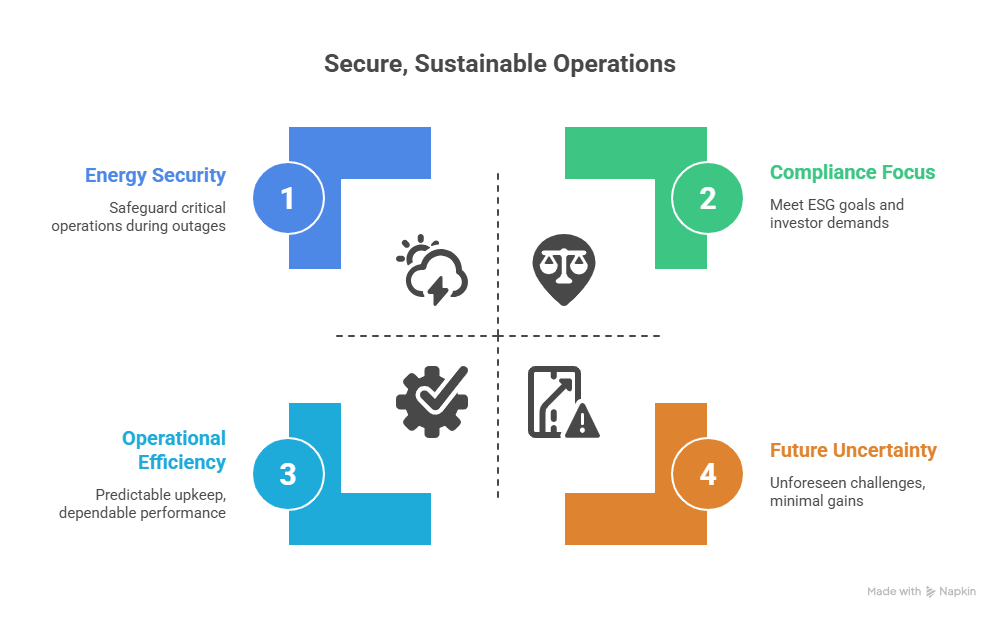
These protections extend well beyond the life of current tax incentives. Even as credits sunset, the risk reduction benefits of solar remain in place, lowering exposure to volatility and giving businesses greater control over their operating future.
Strategic Value in the Boardroom and the Back Office
The value of solar reaches every level of a business. At the board level, it demonstrates long-term stability and strengthens ESG reporting. On the ground, it builds trust with customers, attracts talent, and sets the company apart in competitive markets.
- For enterprises: Solar energy appeals to investors, enhances ESG performance, and stabilizes operating strategy.
- For SMBs: It shows customers you’re forward-thinking, signals employees that you care about sustainability, and helps carve out a stronger market position.
And with some federal solar incentives still in play until 2027, companies that act sooner will secure even greater financial advantages.
Eric notes: “In today’s environment, solar isn’t just an energy decision, it’s a strategic signal. It tells investors, employees, and customers that the business is built to be resilient for the long term.”
Why Solar Is Becoming the CFO’s New Favorite Line Item
At every scale, solar transforms an unpredictable monthly energy bill into a strategic asset. For smaller businesses, it protects margins and makes long-term planning easier. For enterprises, it hedges risk, delivers steady returns, and strengthens investor confidence.
Whether you act now to maximize incentives or wait until the credits phase down, the business case holds. Solar saves money, reduces risk, and positions companies to thrive in a volatile energy landscape.
Follow Solar Insure on our social media channels to stay connected with the latest industry insights, trends, and expert perspectives. Discover valuable updates, helpful tips, and keep yourself informed and empowered in the evolving solar landscape.
Has your solar installer gone out of business? You don’t have to navigate the uncertainty alone. Discover how SolarDetect can help you with expert remote system checks, repair coordination, and monthly performance updates — backed by Solar Insure and the financial strength of Zurich North America. Take the next step toward peace of mind by exploring SolarDetect today.
