
Key Takeaways
Tesla Powerwall remains one of the most widely adopted home battery systems, holding roughly 70% market share, and demonstrates strong reliability with a low 0.93% failure rate based on real-world claims data. Most failures occur early, with nearly 84% happening within the first year, typically due to installation issues or manufacturing defects, aligning with standard electronics failure patterns. While units generally last 13–16 years with gradual capacity degradation, homeowners should plan for potential labor costs during repairs, as manufacturer warranties often exclude service expenses. The average labor cost payout from Solar Insure data was $604.
Solar Providers – ready to offer unmatched value for your clients? Click here to apply to become a Solar Insure Certified Provider.
Homeowners/Business Owners – Learn more about our warranty offerings here.
The Tesla Powerwall is one of the most well-known pieces of equipment in solar. This battery, or inverter/battery combo in the case of the Powerwall 3, represents a significant share of the storage market and has remained a popular option among homeowners looking for solar due to its affordability, value, adoption by large installers, and integration with many virtual power plant incentives across the US.
But just how reliable is the unit, and what can homeowners who adopt the technology expect in the long term? Solar Insure is in a unique position as an independent warranty provider to have a national fleet of thousands of Tesla Powerwall units that we monitor and have collected data on claims made on that equipment.
So let’s dive into some of the data we’ve collected about Powerwalls and their claims data.
Table of Contents
Tesla Powerwall Overview
Before diving into the failure rate data, let’s do a quick overview of the Tesla Powerwall 3. The Tesla Powerwall 3 has been one of the most popular battery units in the market in recent years.
A single unit boasts:
- 13.5 kWh capacity
- 48A continuous discharge rate
- Expandable up to 7 units
- 10-year warranty
Recently, we named the Tesla Powerwall 3 among our Best Batteries for 2026. The unit is a hybrid inverter/battery, meaning the inverter and battery are integrated into a single unit.
Because the inverter and battery cannot be separated and serviced individually, if either the inverter or battery fails, the entire unit must be replaced.
Tesla Market Share
Ohm Analytics is a platform that tracks sales and installation data for solar and BESS projects, and they put out regular reports on the industry. In one of their recent flash reports, Ohm showed some really interesting data around Tesla’s market share.
As an inverter, Tesla has held a roughly 10% market share over the entire US, falling third behind Enphase and SolarEdge.
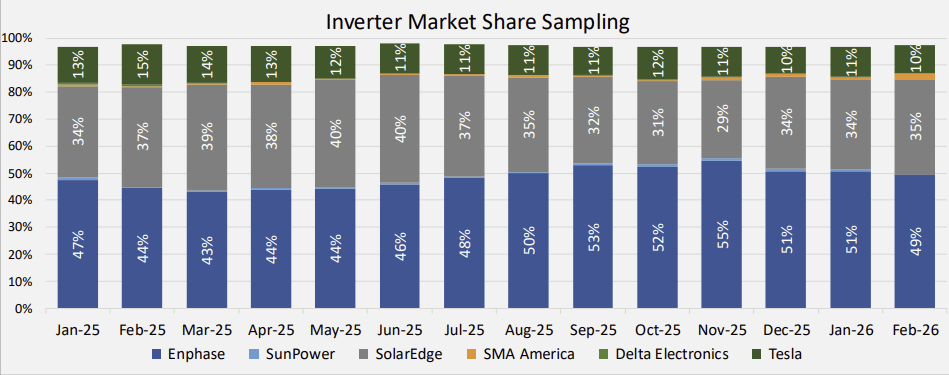
However, Tesla’s market share is considerably higher in key solar + storage markets, like California and Puerto Rico, where the lack of net metering credits is the most prevalent. Especially in California, Ohm notes a significant increase in Tesla’s usage after NEM 3.0 went into effect.
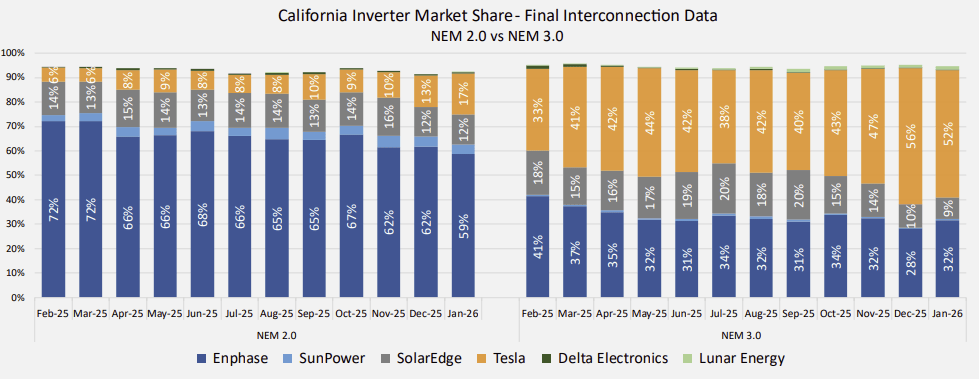
While inverters are a mixed bag depending on location, Tesla’s dominance can be most seen in the battery market share. As of February 2026, Tesla held a 70% share of the energy storage market share.

So, while Tesla definitely commands a significant portion of installed volume over the last year, how is it performing?
Tesla Failure & Claims Data
Solar Insure Certified Providers can offer our 30-year warranties to consumers, provided the equipment is on our Approved Vendor List (AVL). We thoroughly vet manufacturers on our AVL for financial security and quality to ensure equipment is reliable. Tesla is on that list, and we have thousands of units across the country in our fleet.
We pulled data on all Tesla Powerwall units we monitor, specifically for battery failures. Some units are newly enrolled with us, and others have been installed for years. The dataset includes all models of Powerwall, but the majority of units are Tesla Powerwall 3’s. Overall, we found a battery failure rate of just 0.93%.
That failure rate is exceptionally low, but two important questions remain: when did those units fail, and how much did they cost to replace?
When Do Failures Occur
While the overall failure rate is a great indicator of product quality, our data only represents a portion of all installed units. Scale up the numbers, and we’ll find many homeowners across the country who have failed units. So what does failure look like?
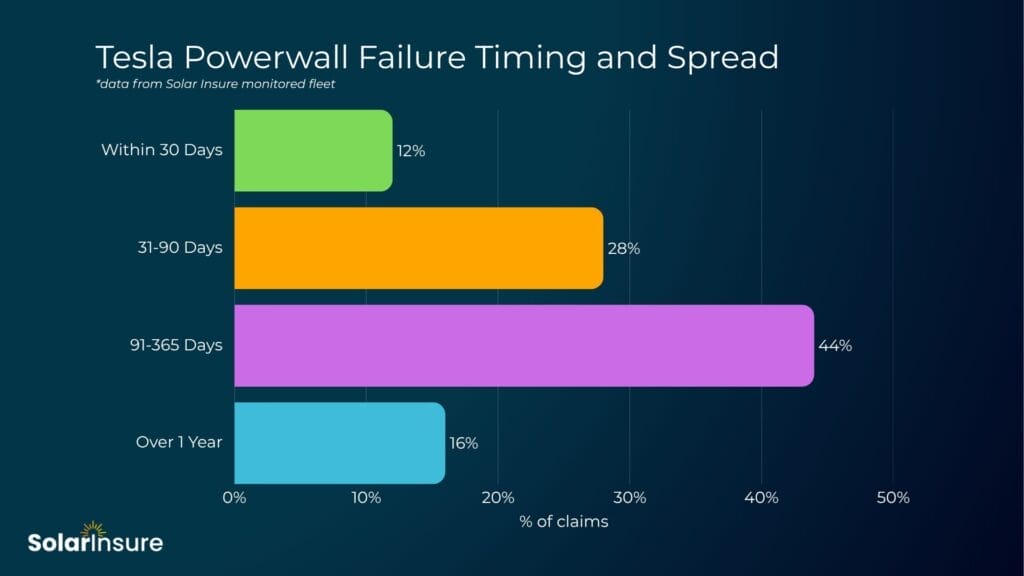
Our data showed that 44% of failure claims we received came between 90 days and 1 year from installation. Interestingly, 40% of failure claims came within 90 days of installation, along with common high infant mortality rates among electronics.
Early window failures would usually indicate manufacturing defects or installation errors. In product failures, there’s a concept called the “bathtub curve”, where component failures tend to be higher in the early life and later life of a product, so our data follows suit.
What Do Failures Cost?
When a battery fails, manufacturer warranties can typically replace the unit as long as the failure was within warranty. Most manufacturers’ warranties, though, do not include labor costs to have a technician come out, troubleshoot, and actually make the repair or swap out the broken unit.
Solar Insure SI-30 warranties cover parts and qualified labor costs associated with the repair or replacement of defective units. Our data showed an average claims payout for Powerwall units of $604.
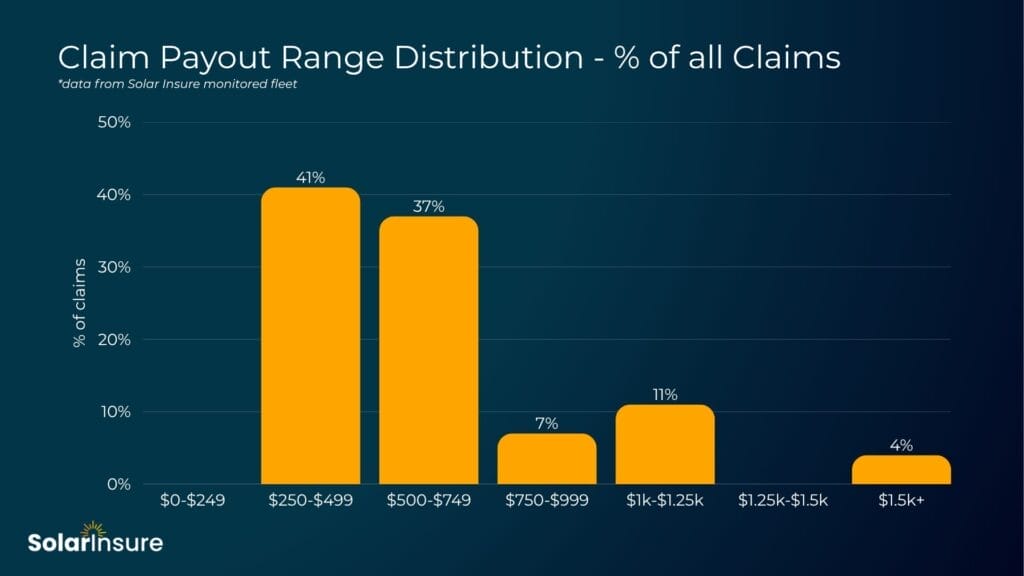
Some units did require higher claim payout amounts; those units typically required multiple visits to the site and additional circumstances.
How Long Will A Tesla Powerwall 3 Last?
Under normal use, a Powerwall should last about 15 years. The Tesla Powerwall battery starts at 13.5 kWh and loses roughly 1.5–2% of capacity per year under normal home use. The degradation is gradual, more like a slow slope than a cliff. By the time Tesla’s 10-year warranty expires, most homeowners still have about 70-80% of their original capacity. By year 20 they’re typically around 50–60%.
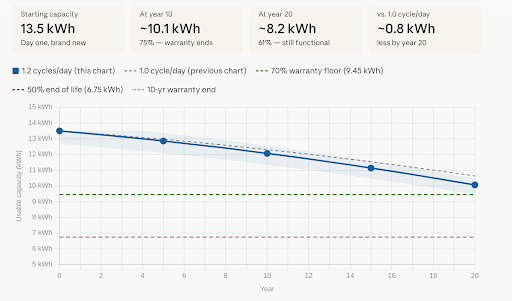
Most homeowners in normal use won’t feel the difference until year 10–13, when the overnight backup duration starts to noticeably shorten. Full replacement is typically at year 13–16.
Reliability Grade
Overall, the Tesla Powerwall is a very reliable unit, which is great considering the significant market share the product holds. People investing in this unit should feel confident that the product will hold up well over time.
However, if you’re using a Powerwall as part of your installation and not working with a Solar Insure Certified Provider who can protect you with an SI-30 warranty, consumers should make sure to budget for labor repair costs. While our data only covers a period of time, these units are designed for 10+ years, and multiple failures could occur.
Follow Solar Insure on our social media channels to stay connected with the latest industry insights, trends, and expert perspectives. Discover valuable updates, helpful tips, and keep yourself informed and empowered in the evolving solar landscape.
Has your solar installer gone out of business? You don’t have to navigate the uncertainty alone. Discover how SolarDetect can help you with expert remote system checks, repair coordination, and monthly performance updates — backed by Solar Insure and the financial strength of Zurich North America. Take the next step toward peace of mind by exploring SolarDetect today.
