
Key Takeaways
Inverters play a critical role in solar system performance, reliability, and long-term value. There is no single best inverter for every project, as the right choice depends on system design, site conditions, and future energy goals. This article explains how inverters are evaluated and highlights the top inverter brands for 2026 based on reliability, warranty strength, and manufacturer stability.
String inverters, microinverters, hybrid inverters, the list goes on and on. But which one is the best choice for someone going solar in 2026?
As is the case with most questions in solar, it depends on the goals of the individual homeowner. Maybe you’re part of the 40% of homeowners who want to add battery storage right from the get-go. Maybe you’re a homeowner whose roof is cut into 5-6 different planes, each filled with panels. Maybe you’re installing a ground-mounted system that will face directly south.
No matter the case, there’s no “one size fits all” solution when it comes to inverters. Unlike solar panels, different types of inverters have significant effects on your system’s power output and capabilities.
So let’s discuss what to look for in your inverter, and give you our list of the best inverter brands available.
Table of Contents
The Different Types of Inverters
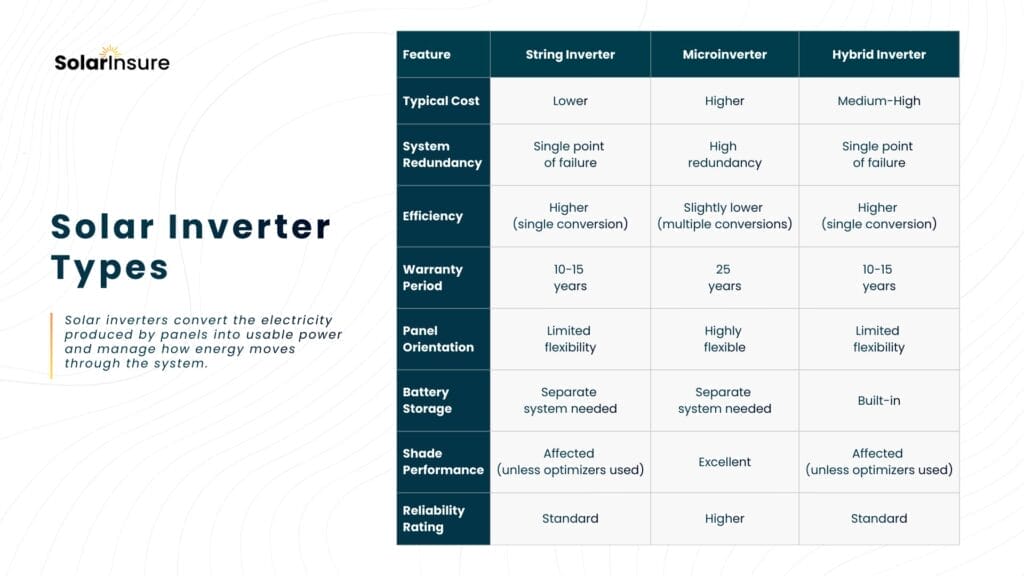
| Feature | String Inverter | Microinverter | Hybrid Inverter |
| Typical Cost | Lower | Higher | Medium-High |
| System Redundancy | Single point of failure | High redundancy | Single point of failure |
| Efficiency | Higher (single conversion) | Slightly lower (multiple conversions) | Higher (single conversion) |
| Warranty Period | 10-15 years | 25 years | 10-15 years |
| Panel Orientation | Limited flexibility | Highly flexible | Limited flexibility |
| Battery Storage | Separate system needed | Separate system needed | Built-in |
| Shade Performance | Affected (unless optimizers used) | Excellent | Affected (unless optimizers used) |
| Reliability Rating | Standard | Higher | Standard |
Inverters are the brains of a solar energy system. While panels are the part everyone knows and talks about, inverters are just as critical a component and are present on every install. Inverters are the brains of a solar system, converting the DC power produced by solar panels into AC and feeding it into your home/building.
Inverters are also actively engaging with your home and electric grid, monitoring energy usage to determine where power is sent. If your home requires more power, the inverter directs flow to the loads; if all the home’s needs are met, it can feed power into the grid or a battery or reduce power production from the panels.
In cases involving batteries, inverters also control battery charging and discharging. Needless to say, inverters are complicated devices and the most critical piece of a solar system. That’s why they’re also the most common piece of equipment that fails.
String Inverters
A string inverter is an inverter that feeds all the panels in an installation to a single DC-to-AC converter. Panels are tied together in series and parallel, then all feed into a single inverter, which supplies power to the home.
String inverters are popular because of their simplicity and higher efficiency. With only one inverter on site, string inverter setups are often less expensive than microinverter systems and can produce more energy in certain scenarios. However, string inverters are also a single point of failure – if that single inverter goes down, the entire system stops producing energy.
Some string inverter technologies use Module Level Power Electronics, commonly called Optimizers or Maximum Power Point Trackers, to reduce inefficiencies caused by shade, lower-producing panels, or panels facing different directions.
An offshoot of string inverters is the Hybrid Inverter, which has been gaining popularity in recent years. Hybrid inverters are string inverters with built-in batteries for a one-inverter + storage solution.
String inverters often have 10-15 year manufacturer warranties, with some companies offering extended warranties.
Microinverters
Microinverters are smaller inverters that are designed to attach to an individual panel. Rather than have a single source to convert DC to AC, one microinverter is attached to each panel, converting power right at the source and feeding it down to the home. The various strings are all combined before being fed into the home.
Microinverters are popular because they provide significant system redundancy; if one microinverter fails, the others can continue producing power. They also allow for more complex systems in which panels within the same string face different directions. Microinverters can be more reliable than string inverters.
As we mentioned above, because of the increased number of equipment units, microinverter setups tend to be more expensive to install and slightly less efficient. Every time DC is converted to AC, some power is lost. Because these systems do that conversion many times, efficiency is often lower.
Microinverters most often have a standard 25-year warranty.
What Makes a Good Inverter?
While it’s easy to say you want the inverter with the highest efficiency, the answer is more complicated. If a system has very little shade from trees and one to two roof planes are being used, a string inverter may be a better choice. If a system has many roof planes or will be shaded by a tree or chimney, microinverters may be a better choice. Desired ROI also comes into play, as does battery storage, though all inverter types can integrate with batteries.
A previous article of ours, Decoding Solar Data Sheets, discusses some of the key metrics to look for when researching inverters. Some of the key metrics and those considered for the “Best Inverter” list include:
- AC power output – This shows the maximum strength of the inverter. It should be able to handle all the power your solar panels produce.
- Maximum efficiency – Efficiency tells you how good the inverter is at converting solar energy (DC) into the type of electricity your home uses (AC). Look for an efficiency rating of 95% or higher.
- Manufacturer warranty – Inverters come with a limited warranty that ranges from 5-25 years, with some options to extend coverage.
To further assess whether an inverter is of top quality, we also evaluate the product and manufacturer on a rigorous 7-step evaluation that includes:
- Testing Lab Certifications
- Product Track Record & Field Reliability
- Manufacturer Financial Health Assessment
- RMA/Claims Data Analysis
- Warranty Policy Review
- Testing & Quality Protocols
- Vertical Integration Risk Analysis
Only solar components from manufacturers who meet or exceed Solar Insure’s standards across all criteria can be considered one of the best inverters and be on Solar Insure’s Approved Vendor List (AVL). This multi-faceted approach leaves no stone unturned.
Our 7 Step Approach
The approval process we utilize to evaluate equipment for the AVL assesses the quality, reliability, and financial stability of an inverter manufacturer. We utilize this same process for solar panels and batteries.
1. Testing Lab Certification
Products must pass rigorous testing to earn a UL certification, and we validate the certificate’s authenticity. We also consider other certifications that enhance or supplement the UL listing. For non-UL-listed products, we compare their safety and reliability standards.
2. Product Track Record & Reliability
Assess the product’s failure rate in real-world conditions.
- Review any past recalls and how the company handled them.
- Ensure the most recent version of the product has a consistent track record.
- Gather feedback from installers and service technicians about product quality.
- The product should have a minimum of 3 years of claim history.
3. Financial Health Assessment
- Evaluate the company’s financial stability by examining financial reports, potential liabilities, and outstanding debts.
- Conduct financial checks to assess credit risk.
- Check for any red flags in recent financial news or statements.
- Investigate any ongoing lawsuits or significant financial drains that might lead to bankruptcy.
4. RMA/Claims Data Analysis
- Track return and claims data to identify patterns of product failures.
- For new products or manufacturers, we set a monitoring period before fully endorsing the product.
- We aim for a failure rate of 1% or less for inverters and batteries, and 0.01% for panel manufacturers.
5. Warranty Examination
We assess the length and coverage of the warranty and determine if the manufacturer offers reimbursement for defective products.
6. Manufacturing and Testing Protocols
We check if the company has robust in-house testing before releasing products.For vertically integrated companies, we ensure they have rigorous checks to maintain product quality across the supply chain.
7. Vertical Integration Risks
We analyze the degree of vertical integration within the manufacturer’s operations, noting that vertically integrated companies may present higher risks due to complexities in managing various production stages.
The above criteria are used for determining the Best Inverters for 2026 and whether the equipment can be used with a Solar Insure warranty. Only projects using equipment from the Solar Insure AVL can qualify to use one of our warranties.
The Best Inverters for 2026
First up is residential inverters, which are single-phase. Here’s the list of the Best Inverters for 2026:

- AP Systems
- Canadian Solar
- EcoFlow
- EG4
- Enphase
- Fortress Power
- Fox ESS
- FranklinWH
- Generac
- Hoymiles
- Lunar Energy
- Sigenergy
- Qcells
- SMA
- Sol-Ark
- SolarEdge
- Sonnen
- Tesla
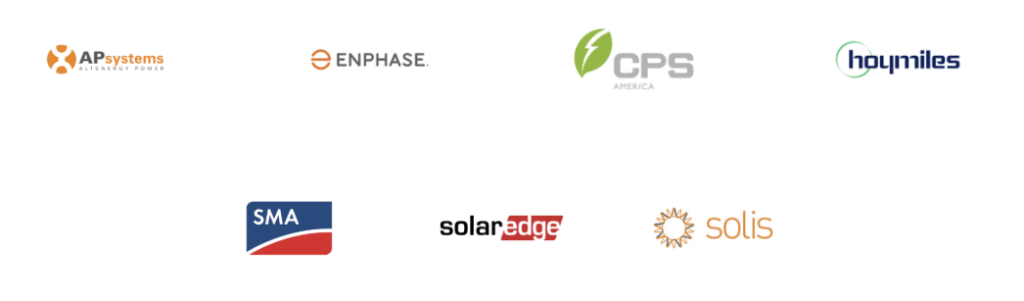
For commercial, three-phase inverters, here is the Best Inverters for 2026 List:
Learn more about Solar Insure’s AVL and how we evaluate quality standards: https://www.solarinsure.com/solar-component-quality
Learn more about Solar Insure warranties and find a Certified Provider near you: https://www.solarinsure.com/our-solutions
Follow Solar Insure on our social media channels for all the information you could ever need about solar. Stay up to date with the latest in solar tips, trends, SI-30 product notes, and pro tips for success in your solar business.
